The Turnstile Broadcast: Why Non-League Matchdays Are Youth Radio's Real Academy
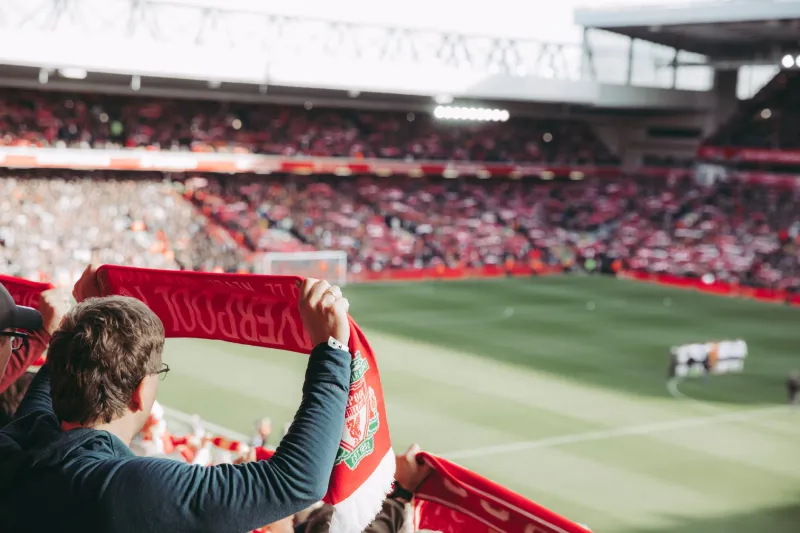
Saturday, 3pm. A non-league ground somewhere off a ring road. The tea hut is doing steady business, the 50/50 draw tickets are being waved about, and behind the main stand a group of teenagers is trying to get a microphone to behave in a wind that has clearly got other plans. This is not a crisis. This is the classroom.
Youth radio has spent years getting good at the studio: tight links, clean beds, presenters who know how to hit a post. But some of the most useful lessons in 2026 are happening where the WiFi is patchy and the crowd is loud. Non-league football grounds — from step five and six upwards, and across the women's pyramid too — are becoming genuine broadcast partners for youth stations. Not as a novelty, and not as a photo opportunity. As a place where young people can learn the trade in public, with real stakes and a very real chance of rain.
Why the terraces beat the studio
A studio teaches you to control the environment. A football ground teaches you to work with one you cannot control. That is the difference, and it matters.
At a matchday, a young commentator has to identify players quickly, keep track of substitutions, follow a game that will not pause for a retake, and describe action without leaning on a script. A producer has to juggle a live feed, a backup recorder, social clips and a presenter who has just lost the thread because a goal went in. A reporter has to ask a manager a sensible question ninety seconds after full-time, when everyone is cold and the result has not gone to plan.
Those are not soft skills. They are the actual job. And they are much harder to fake than a well-rehearsed link over a backing track.
There is also the audience question. Youth radio often talks about reaching local listeners, but a non-league crowd is local listening in physical form. Parents, volunteers, players' families, the people who run the club shop — they are the community the station says it serves. Broadcasting from the ground puts the station in the same place as its audience, rather than asking that audience to come to it.
What a matchday partnership actually looks like
It does not need to be a five-camera operation. The strongest setups tend to start small and deliberately.
A typical youth radio matchday team might include two commentators, one pitchside reporter, a producer or editor, and one person running social clips. That is five people, not fifty. The output could be a pre-match show from the clubhouse, live commentary on a web stream or community radio frequency, half-time and full-time interviews, and a short post-match package for the station's feed.
The kit list is equally modest: a recorder or phone with a decent mic, headphones, a backup battery, a wind shield, and a plan for what happens when the signal drops. The best teams rehearse the handover between commentary and pitchside reporting before the season starts, not ten minutes before kick-off.
Accreditation matters. Clubs have media policies, and youth stations should ask about them early. Who is allowed in the dressing-room corridor? Where can a reporter stand? What is the club's position on filming minors in the crowd? These are not boring details. They are the difference between a partnership that lasts and one that ends in an awkward email.
The club's side of the deal
Non-league clubs are not short of enthusiasm, but they are usually short of time. A youth radio partnership has to make their Saturday easier, not harder.
That means being clear about what the station will deliver: a match report, audio clips for the club's social channels, a player interview, maybe a monthly round-up show. It means turning up when you say you will, and not treating the club as a free backdrop for content.
In return, clubs can offer something youth stations genuinely need: access, atmosphere and a reason for listeners to care. A club that lets a young reporter interview the manager after a bad defeat is giving that reporter a lesson no training course can replicate. A club that shares its fixture list and storylines is giving the station a weekly anchor for its community coverage.
There is a sponsorship angle too, but it needs handling carefully. Local businesses already sponsor non-league clubs — the stand, the match ball, the player of the month. A youth station can offer audio sponsorship idents or a short matchday feature, but it should not turn volunteers into unpaid sales staff. Keep it simple, keep it transparent, and make sure any revenue conversation happens with the club, not around it.
How to set it up in 2026: a practical checklist
Start with one club, one fixture and one clear output. Do not promise a full season of live commentary before you have tested a single afternoon.
1. Pick the right club. Look for a club with a willing media contact, a decent press area or at least a dry spot for a desk, and a community ethos. Step five and six clubs are often more open to experiments than bigger outfits with tighter media operations.
2. Agree the boundaries in writing. Safeguarding, media access, filming consent, who owns the audio, and what happens if a young person needs to leave early. A one-page agreement is better than a vague chat.
3. Test the tech before matchday. Walk the ground. Find the signal blackspots. Check where the power is. Bring a backup recorder and a printed fixture list, because phone batteries and memories both fail.
4. Rehearse the roles. Run a 20-minute practice commentary from the stands during warm-up. Let the producer practise cutting in. Let the reporter practise asking one good question rather than five average ones.
5. Publish something the same day. A two-minute clip, a result round-up, a photo with a caption. The club will share it, the players' families will share it, and the station gets a local audience it can build on.
6. Debrief properly. What worked, what failed, what will you change for the next fixture? Write it down. The second matchday is where the learning really starts.
What can go wrong — and why that is fine
Weather is the obvious one. So is a dead phone, a lost signal, a match that finishes 0-0 after two hours of travel, or a manager who would rather not talk. None of these are disasters if the team has a plan.
The bigger risk is overpromising. A youth station that tells a club it will deliver live commentary every week and then disappears after three fixtures does more damage than one that starts with a single pilot and builds slowly. Reliability is the currency here. Turn up, do the work, say thank you, come back.
The bigger picture
Non-league football and youth radio have more in common than they might think. Both run on volunteers, local knowledge and a stubborn belief that the thing they are doing matters even when the crowd is small. Both are community infrastructure dressed up as entertainment.
For young people, a matchday broadcast is a proper taste of live production: unpredictable, collaborative and unmistakably real. For clubs, it is a chance to reach a younger audience without pretending to be something they are not. For listeners, it is local radio that actually smells of the place it comes from — mud, chip fat and all.
The next big gig for youth radio might not be a studio upgrade or a viral clip. It might be a borrowed table behind the goal, a decent wind shield, and ninety minutes of learning to talk about something that matters to the people standing around you.