The Sunday Switchboard: Lost Ferrets, Loose Change and Youth Radio’s Warmest Hour

Photo: teenagers community radio studio Sunday morning noticeboard phone call, via lookaside.fbsbx.com
On a wet Sunday morning in November, the most important voice in a small UK town might belong to a fifteen-year-old reading out the description of a missing border terrier. Name: Biscuit. Last seen near the allotments. Wearing a red collar and, according to the caller, ‘a look of mild inconvenience’. Within minutes, the studio phone lights up. Someone has spotted a dog matching that description outside the corner shop. Someone else knows a neighbour who has a spare lead. The show carries on, but the town has quietly done a small, good thing together.
This is the Sunday Scramble: the community noticeboard hour that has become a fixture on youth radio schedules across the UK. It is low-tech, occasionally shambolic and almost impossible to format neatly. It is also one of the most trusted hours in grassroots broadcasting.
A noticeboard with a microphone
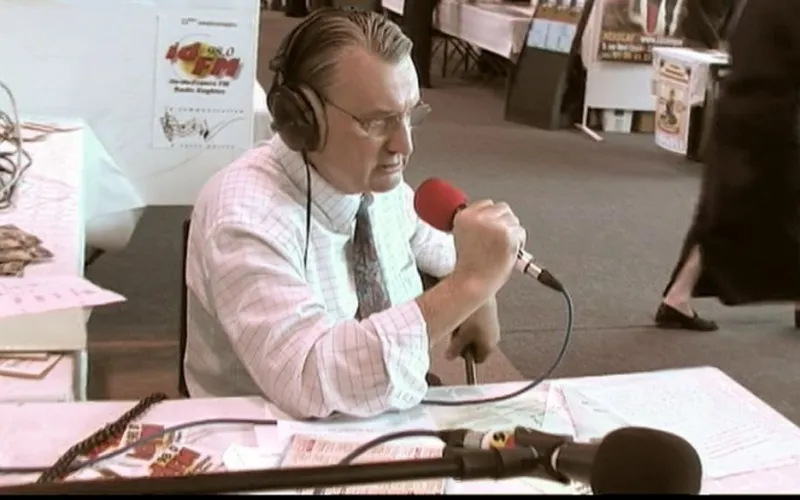
The format is simple. Young presenters open the lines, read out messages sent in by listeners, and hand the mic over to whoever calls. Missing pets. Lost keys. A bicycle found behind the bus shelter. Charity shop bargains. A pop-up gig in a village hall that evening. A request for volunteers to help tidy the local park. A teenager selling homemade badges to fund a school trip. It is the parish noticeboard, the supermarket corkboard and the family group chat, all squeezed into two hours of live radio.
What makes it work is not polish. It is proximity. A national station can tell you what is trending. A youth radio Sunday Scramble can tell you that the chippy is closing early, that the 11A bus is running late, and that someone’s nan has a spare ticket for the church hall quiz. In 2026, when local news desks are thinner and social media feeds are increasingly noisy, that kind of hyper-local information feels genuinely valuable.
Why low-tech wins trust
There is a reason the Sunday Scramble often sounds more like a phone-in than a produced feature. Trust behaves differently at local level. Listeners do not need a slick package to believe a message about a missing cat. They need to recognise the voice, know the street name, and feel that the person reading it out is not performing. The scrappiness is part of the contract.
Young presenters learn quickly that the best notices are specific. ‘Dog missing’ is forgettable. ‘Small black terrier, red collar, last seen near the recreation ground at 9am, answers to Biscuit’ gives the audience something to do. The same goes for charity shop finds: ‘Blue denim jacket, size 12, £6, in the window of the hospice shop on Mill Street’ is a public service announcement. ‘Nice jacket going cheap’ is not.
The hour also builds a different kind of listener relationship. People ring in because they have something to say, not because a producer has booked them. That means the show belongs to the town rather than to the station. For youth radio teams, that sense of ownership is gold dust.
Caller roulette and the art of the graceful save
Handling unpredictable callers is a core skill of the Sunday Scramble, and it is not taught in many media courses. A caller might forget why they rang. Someone might try to read out a three-minute poem about their neighbour’s shed. A well-meaning regular might attempt to settle a decades-old feud live on air. The presenter’s job is to keep the hour moving without making anyone feel foolish.
Experienced young hosts tend to rely on a few simple habits. They repeat the key detail back to the caller so listeners can follow. They keep a stack of neutral follow-up questions ready. They learn the polite exit: ‘That’s brilliant, thank you, we’ll keep that one on the board.’ And they never promise to read out something later unless they actually will.
The best teams also brief their callers gently before they go live. Not in a scripted, stiff way, but enough to avoid the classic Sunday Scramble moment where a lovely, rambling story about a lost glove turns into a five-minute detour through someone’s family history. Warmth is the point. Dead air is not.
The charity shop economy of content
Charity shop finds have become their own mini-genre within the Sunday Scramble. Listeners ring in with recent purchases, baffling donations and objects nobody can identify. A set of fondue forks. A VHS of a 1990s drama. A ceramic owl with a mysterious chip. The segment works because it is funny without being cruel and because it turns local high streets into a shared treasure hunt.
For youth radio crews, it is also a useful lesson in content economics. You do not need a big budget to make engaging radio. You need curiosity, a phone line and a willingness to let the audience be the talent. A charity shop find can spark a conversation about fast fashion, local charity work or the strange things people keep in their lofts. It can also just be a laugh. Both are valid.
Last-minute gigs and the local music pipeline
The Sunday Scramble is not only about lost pets and loose change. It has become a quiet promotional engine for local music. A teenage band announces a last-minute gig in a café basement. A promoter calls in with spare tickets for a spoken-word night. A choir mentions that its rehearsal is open to new members. These notices do not sound like marketing. They sound like a mate telling you what is on.
That is why the hour matters for grassroots culture. National platforms can amplify artists once they have traction. Local radio can help create the traction in the first place. A Sunday morning mention can put twenty extra people in a room on a Tuesday night. For a young station, that is a tangible result.
A neighbourhood switchboard for 2026
The Sunday Scramble is not trying to compete with polished national programming. It is doing something different: acting as a neighbourhood switchboard. It connects the person with the spare lead to the person with the lost dog. It turns a charity shop find into a shared joke. It gives a local band a fighting chance. And it lets young presenters learn live broadcasting in the messiest, most human way possible.
In a year when so much of radio is chasing scale, the Sunday Scramble is a reminder that local relevance is not a small ambition. It is the whole point. Biscuit the border terrier, we are pleased to report, was found before lunch. The show moved on to a missing bike, a spare ticket for the church quiz and a debate about whether pineapple belongs in a jacket potato. Local radio at its finest.