Gritters, Group Chats and Going Live: The Weather Drill Teaching UK Youth Radio to Move Fast
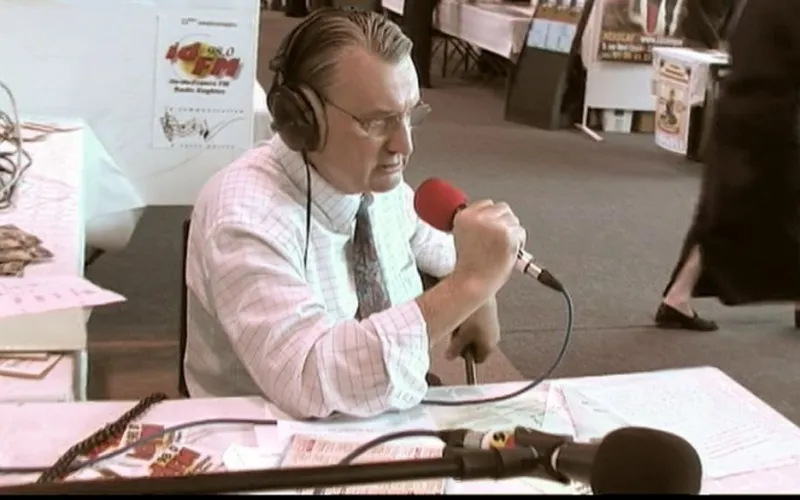
Photo: PASCAL DUTHUIN, CC BY-SA 4.0, via Wikimedia Commons
At 7:12am on a sleety Tuesday in November 2026, the most important voice in a corner of West Yorkshire is not a national breakfast host. It is a 17-year-old with a microphone, a scraping of ice on the studio window and a list of school closures typed into a shared document. The show is not trying to go viral. It is trying to tell people whether the 08:15 bus is running, whether the hill road has been gritted and whether anyone has heard from the pharmacy on the high street. This is not glamorous radio. It is useful radio. And across the UK, youth stations are discovering that the weather is one of the best live-training tools they have.
The story everyone is already living through
Most radio training starts with a pretend bulletin about a pretend council meeting. Weather flips that. When a yellow warning becomes amber, listeners are not waiting to be convinced that the story matters. They are already living it. They want to know if the school gate is open, if the train is cancelled, if the community centre is still running its warm hub. That shared experience changes the way a young presenter speaks. There is less performance and more precision. The question stops being 'how do I sound like a broadcaster?' and becomes 'what does this listener need next?'
Hyperlocal weather coverage also forces teams to get specific. 'The north will be cold' is not much use to a parent in a cul-de-sac with a steep exit and no grit bin. 'The road past the leisure centre is slushy, the 42 is diverting and St Aidan's has shut' is the sort of detail that makes people stay tuned. It is also the sort of detail that can go wrong if nobody checks it. That is where the training really starts.
School closure shout-outs and the trust test
School closure shout-outs are deceptively simple. A presenter reads a list. The listener hears a name and relaxes — or panics about childcare. But the list has to be right. Young teams quickly learn to check council websites, trust official feeds and treat social media posts as tips rather than facts. If a school has not confirmed a closure, it does not go on air. If a bus company has not published a diversion, the presenter says so. 'We have seen a post about it, but we are waiting for confirmation' is not a weak line. It is a trust-building line.
Pronunciation matters too. Local school names, villages and road junctions are a test of whether a station actually knows its patch. A presenter who can say 'Barrowclough Primary' without stumbling sounds like they belong. A presenter who checks, repeats and updates sounds like someone listeners can rely on. The shout-outs also open the door to community check-ins: does anyone know if the corner shop is open? Is the church hall still doing hot drinks? Has the food bank changed its hours? These are small updates with real weight, and they sit naturally alongside the music and the chat.
The live-production drill
Weather coverage is a drill in sourcing, timing and handover. Producers watch Met Office updates, local authority feeds, rail apps and traffic alerts. Presenters write short, clear lines. The best teams use a simple rhythm: here is what we know, here is what we do not know, here is what to do next. They repeat the key information at set times because listeners dip in and out. They do not fill gaps with speculation. They do not promise that a road is clear just because one caller says it is. And they hand over cleanly when the next presenter arrives, because a weather morning can change in the time it takes to play three songs.
The same discipline carries across socials and group chats. A station might run the same bulletin on air, on its Instagram story and in a community WhatsApp group. That sounds like extra work, but it is actually the point. Youth radio is often at its best when it behaves like a local information service with a good playlist, not a playlist with a few interruptions. When the snow starts, the audience can feel the difference.
Why the gritter test matters
There is a useful test for any young broadcaster covering severe weather: can you explain which routes have been treated without sounding like a council press release? The gritter test is really a translation test. It means turning 'primary routes have received treatment' into 'the main roads have been gritted, but the estate roads are still sketchy'. It means explaining a rail replacement bus without pretending the journey will be fun. It means saying 'check before you travel' without sounding like a robot. These are basic skills, but they are the basics that hold up under pressure.
Weather also teaches presenters to be comfortable with uncertainty. Live radio hates a gap, and a young presenter's instinct is often to fill it. A weather window gives them a better option: say what is confirmed, park what is not, and come back when there is more. That is a discipline that improves interviews, phone-ins and music links too. It is hard to overstate how much a listener trusts a station that admits it does not know something yet.
The forecast is not filler
For years, local weather on youth radio could feel like the bit between the good stuff. Now it is becoming the bit that proves the station is paying attention. A school closure, a cancelled bus, a flooded underpass, a snow-day check-in — these are not side stories. They are the live rehearsal for everything else grassroots radio does: being local, being fast and being human. The forecast is not filler between tracks. It is the drill. And the young presenters who learn to run it well will be sharper on air long after the thaw.