Shush Doesn't Mean Stop: Inside the Youth Radio Residencies Moving Into UK Libraries

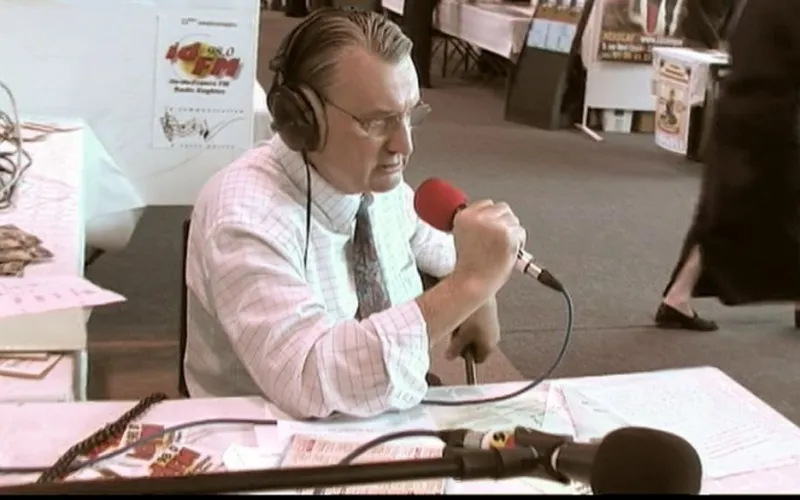
Photo: teenagers broadcasting radio microphone inside public library bookshelves, via i.pinimg.com
There is a specific sound a library makes at ten past seven in the evening. Not silence — nobody who has actually been in one believes that myth — but a low, papery hum. Radiators. A trolley being wheeled back. Somebody's coat rustling in the reference section. It is, it turns out, a decent room to broadcast from.
Up and down the UK, youth radio crews have been quietly working out that the local library is one of the last indoor public spaces they can walk into, sit down in and be treated like they belong. So they have started staying after the doors are locked, plugging a mixer into a socket near the local history shelf and going live from a building most of their listeners have not properly visited since they were eight.
The keys to the reference section
The practical arrangements are less romantic than the idea. Almost every residency we heard about runs on a version of the same deal: one evening a week, usually between six and nine, one member of library staff on site, a booking sheet, and a strict rule that the microphones do not point at the front door.
'We had to prove we were not going to turn the place into a nightclub,' says a presenter at a station in the North West whose Tuesday show goes out from a corner of the main library. 'The first month was basically a trial. Now the staff bring biscuits and we have got a shelf named after us.'
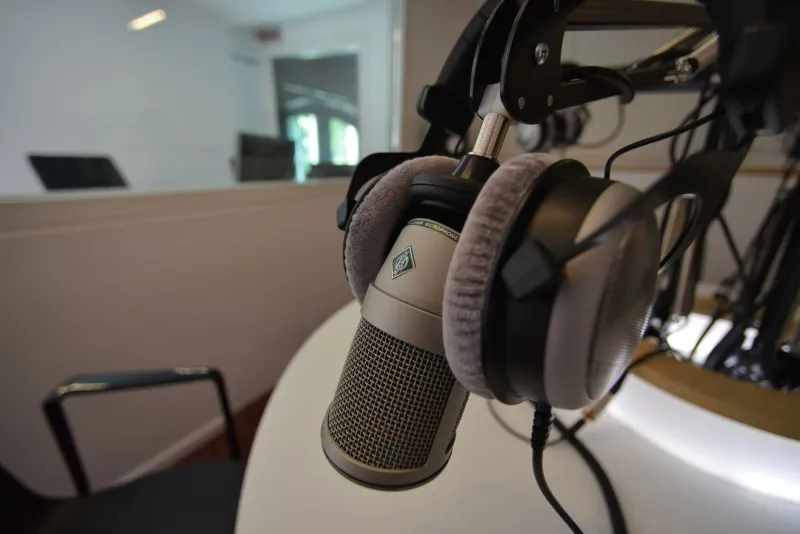
Most crews get a corner rather than a room — a desk, a couple of chairs, a laptop stand and a pop shield. Some stations have gone further and rigged a proper podcasting booth in a disused study carrel, swapping it back to being a study carrel on the four days a week it is not in use. It is not glamorous. It is, crucially, indoors, warm, free at the point of use, and in a building with a lift and a disabled toilet and a bus stop outside.
For sixteen-year-olds in towns where the youth centre closed and the McDonald's has a two-hour table limit, that is not a small thing.
What actually goes out
The content is not what you might expect if your idea of library radio is somebody reading a poem very slowly. The strongest shows we came across use the building as material rather than decoration.
One crew runs a request hour where the only rule is that the song has to be tied to a book. Another has built an entire strand out of interviewing the people who use the reading room — retired bus drivers, exam-season sixth-formers, a man who has been doing the same crossword in the same chair since well before any of the presenters were born. A third records short author chats when writers pass through on tour, then cuts them into a half-hour programme that goes out on a Sunday.
There is also a quieter, more interesting format emerging: the low-volume show. Deliberately gentle, aimed at anyone listening on headphones in a hospital, a care home or a bedroom at eleven at night. No shouting, no stings, no competition to win a hoodie. Just a voice, a book recommendation, and a song.
'We got a message from a woman who listens while she does her mum's care rounds,' one producer told us. 'That is the whole show justified in one text.'
Footfall, not just phone-ins
Here is the bit the stations tend to undersell: the library gets something too. Not just noisy teenagers in a corridor, but young people who come in early, get a card, borrow something, and bring their mates. Several branches reported that a residency brought in family members who had never set foot inside — grandparents dropping off, siblings hanging about, parents poking their heads round the door to see what their kid actually does on a Tuesday.
It is the reverse of the usual youth-radio arrangement. Instead of hunting for an audience across a city, you inherit one. The people already in the building are, by definition, a listening public.
When the building is on the ballot
All of this sits against a backdrop nobody in community radio can ignore. Library hours, staffing and buildings are habitually on the table when councils balance budgets, and every consultation period produces the same anxious cluster of Friends groups, Save Our Library petitions and public meetings in a hall with bad acoustics.
When that happens to a station with a residency, things get complicated quickly. Presenters are young. Many are not voters in the way a campaign would recognise. But they can do something a petition cannot: they can put the building on air.
One station we spoke to recorded an entire two-hour special from inside its library during a consultation, with councillors invited in to answer questions live. Another made a series of three-minute audio postcards — a baby rhyme time, a chess club, the man with the crossword — and put them out in the run-up to the deadline. Neither show told anyone what to think. Both made the building audible to people who had only ever encountered it as a line in a spreadsheet.
That is the quietly political thing about a microphone in a public building. It turns a service into a place, and a place into people with names.
The bit nobody budgets for
There is a fragility to all this that the stations are honest about. Residencies rely on goodwill, on one committed librarian, on a caretaker willing to wait an extra twenty minutes, on a council that has not yet decided to sell the car park. When the arrangement ends, it tends to end fast — and a crew that has spent a year broadcasting from a warm room has to work out whether it can do the same thing from a church hall, a community centre or somebody's front room.
The ones who survive it are the ones who treated the library as a home base rather than a headquarters. Kit that packs down. Running orders that work anywhere. Relationships with the people in the building rather than with the building itself.
Still, ask any of the presenters about the best bit and you get a version of the same answer. Not the guests. Not the listener numbers. It is the bit just before going live, when the doors are locked, the lights are on and a teenager gets to say the words 'good evening, we are broadcasting from the local library' — and mean it.