Plot Twists: The Youth Radio Crews Trading High Street Pop-Ups for Allotment Plots
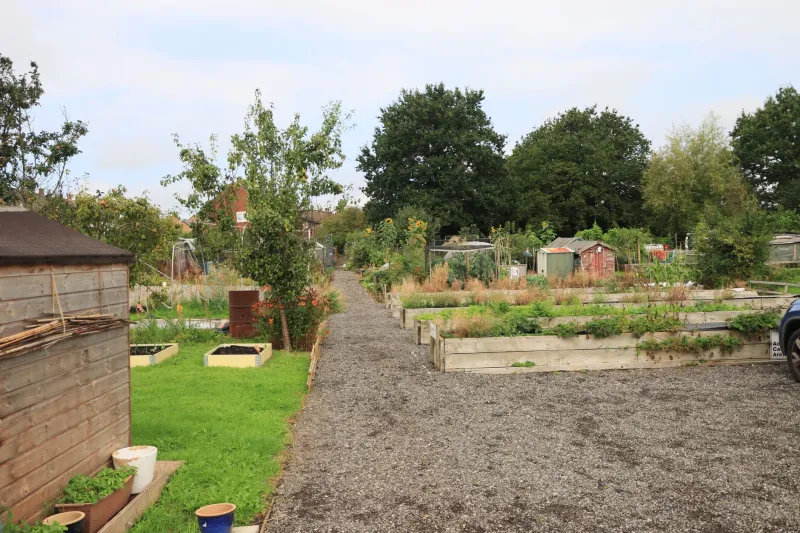
The first thing you notice is the quiet. Not silence — allotments are never silent — but the particular hush of a place where the loudest thing is a sparrow on a fence post. Somewhere between the rhubarb and the water butt, a teenager in a hoodie is doing a link into a song. A cable runs along the path, taped down with gaffer tape the colour of wet soil. A gazebo shivers in the breeze. Welcome to youth radio's newest outside broadcast: the allotment.
Over the past year, a handful of UK youth stations have started trading high-street pop-ups for community gardens, city farms and allotment plots. The logic is simple. High streets are loud, busy and increasingly hard to book. Allotments are quiet, cheap and full of people with stories. Some crews have nicknamed the format Shed FM. The name is a joke, but the ambition isn't.
The Gazebo Is the Studio
Practicality comes first. Most allotment sites have no power, no wifi and no shelter beyond a shed that smells of creosote and old twine. So the kit list looks different from a shopping-centre broadcast. Instead of a PA and a folding table, you need battery packs, a portable recorder, a 4G bonding unit, windshields, a groundsheet and something heavy to weigh down the gazebo legs. A generator is usually a non-starter: too noisy, too smelly, and likely to upset the plot-holders who came for the peace.
The first lesson is that the environment is not the enemy. It's the co-presenter. A plane goes over? Let it. A lawnmower starts up? Move the mic or lean into it. A chicken wanders into shot? That's content. The trick is to stop treating ambient sound as a problem to be edited out and start treating it as the reason you're there. Listeners can tell the difference between a studio and a place. The place always sounds more interesting.
Let the Kettle Do the Talking
The second lesson is about pacing. In a studio, dead air is a crisis. On an allotment, dead air is a kettle boiling in the shed, a spade turning over soil, a plot-holder laughing at something you didn't catch. Young presenters who are used to filling every second with chatter learn to leave gaps. They learn to ask a question and then wait. They learn that a 20-second pause with a blackbird in the background can hold an audience better than a link about the weather.
One station in the North West has a rule for its allotment broadcasts: no more than three questions in a row without a sound. It sounds daft, but it works. The sound might be secateurs, a watering can, a mug being set down on a bench. It gives the listener a sense of place and gives the presenter a moment to think. The result is radio that feels less like a performance and more like a conversation you've stumbled into.
Seed Swaps Are the New Outside Broadcast
The events matter as much as the setting. Seed swaps, allotment society shows, community garden open days — these are ready-made outside broadcasts with built-in audiences and a reason for people to hang around. A presenter with a portable mic can wander between tables of pumpkin seeds and heritage beans, asking the same question over and over: what are you swapping and why?
The answers are never just about seeds. They're about family, migration, memory, the year the slugs won, the neighbour who gave them their first runner bean. A teenager from a youth station in Bristol recorded a 70-year-old plot-holder explaining that he'd been saving the same bean seed since 1979. The clip ran to 90 seconds and got more engagement than the station's chart show that week. No script, no edit, just a man, a bean and a shed.
What the Compost Heap Teaches You About Pacing
Then there's the compost heap. It is, genuinely, one of the best interview locations on the site. It's warm, it steams in cold weather, it's slightly disgusting in a way that makes teenagers laugh, and it gives you something to look at while you talk. More importantly, it's a story about patience. Compost takes months. Allotments take years. Radio, at its best, takes time too.
A youth presenter I spoke to said the compost heap taught her more about interviewing than any workshop. 'You can't rush it,' she said. 'You have to let it do its thing. Same with people. If you ask a question and then fill the silence, you get nothing. If you wait, you get the good stuff.' That's not a bad production philosophy for any station, let alone one with a gazebo and a borrowed generator.
Access Is Everything
None of this works without the plot-holders. Allotment committees can be cautious about newcomers, and fair enough: they've seen plenty of projects turn up, film something and disappear. The stations that have made this work tend to start by helping. They turn up for a work day. They shift a pallet of manure. They promote the seed swap on their socials. They ask before they record. They share the audio back with the contributors before it goes out.
Safeguarding matters too. Under-18s need parental permission, and older contributors need a clear explanation of where the audio will end up. The best crews treat consent as a conversation, not a form. They sit down with a cup of tea and explain that the piece will go on the station's website, that it might be clipped for social media, that they can say no at any point. That's not just good practice; it's good radio. People speak more freely when they know what's happening.
The Quietest Revolution
Youth radio has spent years trying to be louder. Bigger launches, faster edits, more social clips, more noise. The allotment broadcast goes the other way. It's slower, quieter, greener and a bit muddy. It doesn't trend. It doesn't go viral in the usual sense. But it does something that's harder to measure: it builds trust.
The high-street pop-up got attention. The allotment gets relationships. And in a year when youth stations are fighting for funding, audiences and relevance, relationships might be the most valuable thing of all. The next big outside broadcast might not be on a stage. It might be between the bean rows, behind the water butt, with a kettle boiling in the shed and a teenager learning to wait.
If your station wants to try it, start small. Find a community garden. Borrow a gazebo. Bring gaffer tape. And for goodness' sake, let the kettle do the talking.