Beyond the Grant: Five Ways UK Youth Stations Are Keeping the Mic On in 2026
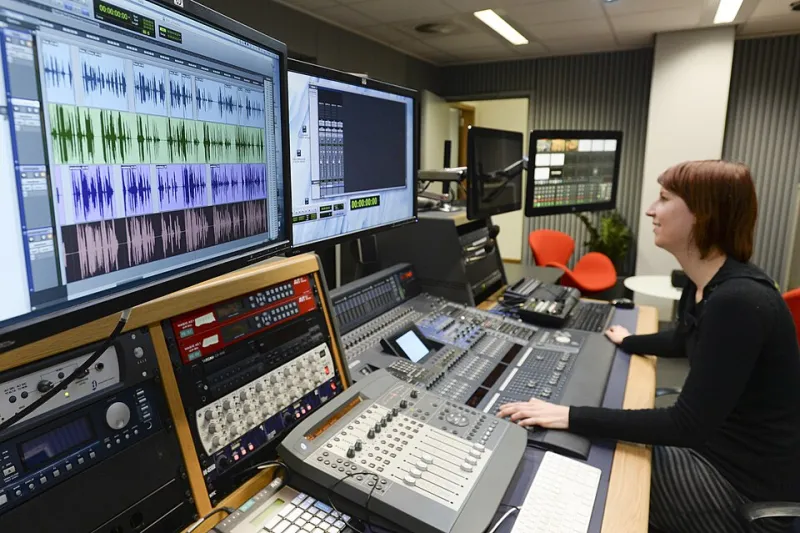
Photo: Europäische Kommission - Audiovisueller Dienst, Etienne Ansotte, CE - Service audiovisuel, EC - Audiovisual Service, Shimera, CC BY 4.0, via Wikimedia Commons
Every youth radio station in the country has had the same conversation in the last year or two. The grant that used to cover the studio lease is smaller, slower or gone. The kit needs replacing. The volunteer coordinator — who was the glue holding the whole thing together — has moved on.
It would be easy to write a doom piece about that. Plenty exist. But the more useful question, and the one we put to station managers, volunteers and young presenters across the UK, is simpler: what's actually working?
Here are five models grassroots youth stations are using in 2026 to keep the mic live, with the honest upsides and the bits nobody puts in the funding bid.
1. Local business sponsorship: the pizza shop model
The most common move is going local and going small. Not chasing a national brand, but signing up a handful of independents — the barber, the takeaway, the driving instructor, the gym — for a modest monthly sponsorship tied to a specific show or segment.
Why it works: small businesses in the same postcode as your listeners actually care about being associated with young people doing something positive. Deals get done in person, quickly, without procurement departments. One station we spoke to funds its entire Saturday schedule from six sponsors paying between £40 and £120 a month.
The honest downside: it's a lot of relationship maintenance for relatively little money, and sponsors drop out when times get tight. It also raises the delicate question of editorial independence — be clear from day one that sponsorship buys you a credit, not a say.
2. Venue partnerships: broadcast from the back room
Instead of paying for a studio, some teams have partnered with venues that already have a space going spare — a youth club, a community centre, a library, a local arts venue — and built a pop-up studio in the corner.
Why it works: it slashes overheads dramatically, puts the station physically at the heart of the community, and often comes with a ready-made stream of contributors walking past the door. Venues benefit too: a live radio show gives them a reason to be open on a Tuesday evening.
The honest downside: you're a guest. Opening hours aren't yours, the Wi-Fi isn't yours, and noise from the next room is now part of your breakfast show. Get the agreement in writing, including what happens if the venue's funding changes.
3. Membership schemes: the fiver-a-month club
A quieter but steadily growing model: regular, small, recurring payments from listeners and families. Not paywalled content — nobody's locking the stream — but a supporter scheme with perks like shout-outs, a monthly newsletter and early access to live events.
Why it works: recurring income is far more predictable than a one-off grant, and it builds a genuine sense of ownership among listeners. One station's scheme started with 22 members and is now past 300, which pays for the hosting and the insurance.
The honest downside: young audiences have very little disposable income, so this often means parents and grandparents paying. It also demands consistent admin and a decent CRM — a clipboard and a PayPal link will only get you so far.
4. Training contracts: teaching the next lot
Many youth stations have quietly become training providers. They deliver accredited and non-accredited media courses, work with schools on enrichment programmes, and take on paid workshop bookings from councils and youth services.
Why it works: it turns the station's existing expertise into income, and the young people on air gain teaching and mentoring skills in return. Some stations now cover their core costs almost entirely from a handful of recurring school partnerships.
The honest downside: training is a business with its own paperwork — safeguarding, insurance, invoicing, quality assurance — and it can crowd out the creative, chaotic, joyful part of making radio. If your volunteers didn't sign up to be teachers, don't assume they'll want to be.
5. Shared broadcast space: the studio co-op
A newer idea gaining ground: two or three small stations sharing one physical studio and splitting the costs — rent, kit, broadband, insurance — while keeping their own identities and schedules.
Why it works: the savings are immediate and substantial, and shared space often leads to shared training, shared guests and cross-promotion between stations. It's the closest thing grassroots radio has to a house share that actually functions.
The honest downside: scheduling is a nightmare, and cultures clash. One station's loud hip-hop show is another station's tea-time documentary. You need clear rotas, a booking system and a written agreement about who owns what if one partner walks away.
What none of these fix
The uncomfortable truth is that most of these models require someone to do fundraising, admin and relationship management — and that someone is usually a volunteer who's already doing three jobs. Money problems in grassroots radio are often capacity problems wearing a disguise.
There's also no substitute for core funding. A small grant that covers the boring stuff — the electricity, the insurance, the licence — makes every one of these models easier to run. Sponsor money is brilliant for a new mic; it's terrible for a lease.
The honest takeaway
Nobody we spoke to claimed to have cracked it. The stations that feel most secure are the ones running two or three of these models at once, so that no single income stream can sink them — a couple of local sponsors, a membership scheme and one solid school partnership is a surprisingly resilient mix.
Grassroots youth radio has always run on improvisation and stubbornness. In 2026 it also needs a spreadsheet. Not romantic, but the mic stays on — and that's the point.