The Slow Burn: Why Youth Radio's Evening Shows Are Outpacing the Algorithm for New UK Music
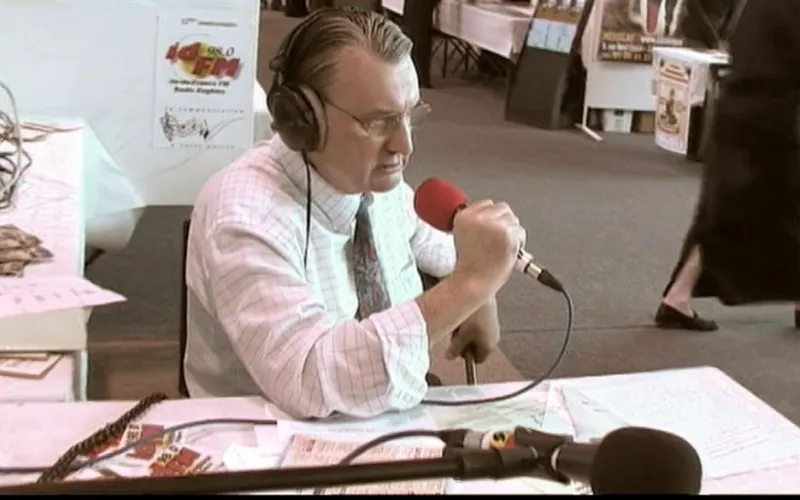
Photo: PASCAL DUTHUIN, CC BY-SA 4.0, via Wikimedia Commons
At 6pm on a Thursday, something quietly radical is happening on youth-led radio stations across the UK. It is not a national drive-time show with a playlist chosen by a committee. It is a 19-year-old presenter in a small studio, reading out WhatsApp requests, playing a track by a local artist for the third week running, and telling listeners to come to a gig in a pub back room on Saturday. That, in 2026, is where a lot of new British music is getting its first real break.
The request line is the new focus group
'We get more messages at 6pm than any other time,' says Maya, 19, who presents an evening show on a youth-led community station in south London. 'People are on the bus home, they have finished college, they are in their group chat. They send a voice note asking for a track by someone they saw at an open mic. We play it, and then someone else messages saying they know them.'
That loop matters. A WhatsApp request line is not just a way to fill airtime. It is a low-cost, high-trust feedback system. Presenters learn what is actually landing in local bedrooms, school corridors and youth clubs. Artists get something more useful than a passive stream: a room full of people who can put a name to a song.
Why the algorithm and the 6pm slot do different jobs
Streaming algorithms are brilliant at serving more of what you already like. They are less brilliant at taking a punt on a 17-year-old from Hull with one song on Bandcamp and a support slot at a community centre. That is not a criticism of the tech. It is just what it is built to do: predict, personalise and keep you listening.
Grassroots youth radio works differently. It is built on context, repetition and local trust. A presenter can play the same track for four weeks, interview the artist, mention the gig, read out a text from their mum, and then play it again. That is slow-burn curation. It does not chase a viral moment. It builds familiarity.
'You can have a song on a big playlist and still feel like nobody knows you,' says Callum, 22, a Sheffield artist who got his first radio play on a youth station in 2024. 'The first time I heard my track on the radio was on a youth station at 6pm. It was not a big station, but it felt like the whole area was listening. I got messages from people I had not spoken to since school.'
Live sessions are cheap, shareable and real
One of the most effective tools in the youth radio kit is the live session. It does not need a huge budget. A decent mic, a laptop, a couple of lamps and a presenter who knows how to make a guest feel comfortable can produce something that feels urgent and intimate.
In 2026, these sessions are being clipped for TikTok, shared in group chats and played back on community stations later in the week. The artist gets content. The station gets a moment. The listener gets to hear a new act before they are polished. It is a small ecosystem, but it is a real one.
Local hype is not a vanity metric
National numbers are not the only way to measure success. For a new artist, local hype can be the difference between playing to 12 people and playing to 60. Youth radio presenters are often the first people to notice that a track is being passed around a school, or that a rapper has a following in a specific estate, or that a indie band has sold out a tiny venue twice.
That knowledge is valuable. It is also hard to buy. A presenter who lives in the same area as their listeners can spot a trend before it becomes a playlist category. They can champion an artist without waiting for a label to do it first. In that sense, the 6pm slot is doing the job that A&R used to do: listening locally, taking a risk and building a story.
The grassroots advantage
None of this means algorithmic playlists are the enemy. They are a useful shop window. But a shop window is not the same as a scene. Youth radio gives new UK music something algorithms struggle to manufacture: a sense of place, a presenter who cares, and a reason to tune in at the same time as your mates.
So if you want to know what is coming next in British music, do not just refresh your streaming app. Find a youth station, tune in at 6pm, and listen to what the request line is saying. The next big thing might be one text message away.