Request Line Revolt: Why the Best Youth Radio Hour Still Starts With a Text Message
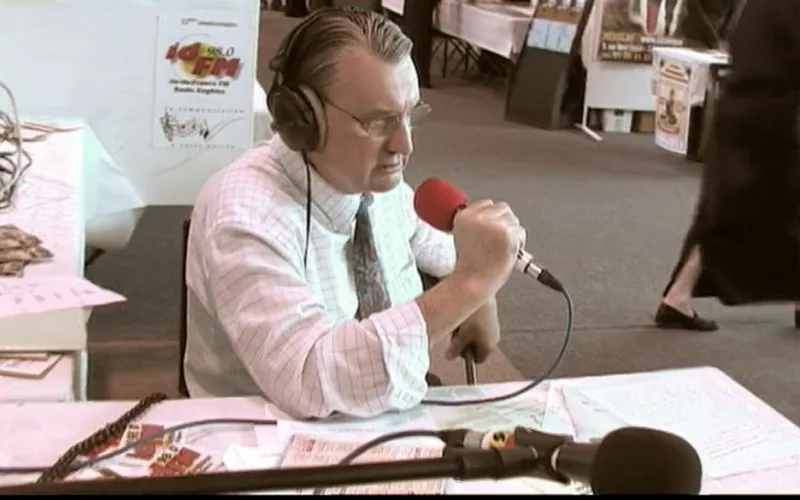
Photo: PASCAL DUTHUIN, CC BY-SA 4.0, via Wikimedia Commons
At 8pm on a Thursday, the most predictable thing about a good youth radio request hour is that it will not be predictable. The presenter has a stack of charity-shop CDs on the desk, a phone full of voice notes and a text line already arguing about whether a local indie band deserves the next slot. There is no pre-loaded playlist. There is a plan, but it is written in pencil.
That might sound like chaos to anyone raised on streaming. It is also exactly the point.
The trust problem with perfect playlists
Streaming has made music discovery effortless. You open an app, tap a mood, and a machine hands you a sequence that sounds like it knows you. For a lot of young listeners, that is genuinely useful. But effortlessness has a side effect: it can be hard to tell why a song arrived. Was it taste, a label push, a mood tag, or a quiet bit of commercial maths?
A hand-built radio hour answers that question out loud. The presenter says who asked for the song. They explain why they pulled a scratched CD from the charity-shop pile. They play a demo from a band three streets away and tell you where the gig is. You can hear the reason behind the choice. In a crowded music landscape, that reason is becoming a trust signal.
This is not an argument against streaming. It is an argument for contrast. The more automated music feels, the more valuable a human-shaped hour becomes — especially for youth stations that do not have the budget for big names or glossy campaigns.
What the hour actually sounds like
An anti-algorithm show is not a show with no preparation. It is a show where the preparation leaves room for people. Most successful versions have three simple ingredients: requests, finds and local demos.
The request line is the engine. Listeners text in a song, a memory or a one-line reason. The presenter reads the name, not just the track. They might group requests around a theme — bus journeys, break-ups, five-a-side warm-ups — but they do not force it. If a request does not fit, they say so and offer a swap. That small act of honesty does more for trust than a hundred slick links.
The charity-shop shelf is the personality. A 50p CD with a cracked case can become a running joke, a history lesson or a surprise favourite. It is also a cheap way to widen the music mix beyond whatever is trending. One week it is a forgotten Britpop single; the next it is a gospel compilation someone’s nan donated.
The local demo inbox is the community link. Bands, bedroom producers and youth club rappers send tracks in. The presenter gives them a proper introduction, plays the full song if there is time, and tells listeners where to find them. No fee, no favour, just a fair hearing.
The messy bits are the format
A hand-built hour will occasionally go wrong. A text comes in too late. A CD skips. A local demo is quieter than everything else. A listener asks for a song the presenter has never heard of and has to decide whether to risk it.
Those moments are not failures. They are the texture that separates radio from shuffle. The trick is to plan for them. Keep a short reserve list. Have a backup track ready. Learn the desk enough to fade out gracefully. Most importantly, do not pretend the mess is not happening. A presenter who says, ‘That did not quite work, let us try this instead,’ sounds more trustworthy than one who reads a script as if nothing ever wobbles.
Building one without a budget
You do not need a huge library or a fancy studio. You need a clear hour and a few reliable habits.
Start with 60 minutes, not three hours. One presenter, one producer or a mate with a notebook, and a shared spreadsheet for requests. A cheap station text service or a spare phone will do. Keep a CD wallet, a USB stick and a folder for local demos. Ask listeners for one song and one sentence — the sentence is often more interesting than the song.
Give the hour a simple shape: opening request, local demo, charity-shop find, listener pick, closing track. Do not over-script it. Leave two or three slots open for last-minute texts. Record voice notes from listeners if they are too shy to go live. Credit everyone by name. Put the playlist online afterwards so people can find the songs again.
The budget version is not a lesser version. It is the version that fits youth radio’s actual strengths: local knowledge, close relationships and the willingness to let listeners shape the hour.
Why listeners stay
An anti-algorithm hour does not win because it is lo-fi or nostalgic. It wins because it is accountable. Someone chose that song. Someone read that text. Someone gave a local band their first play. In a media landscape full of invisible decision-making, that visibility is rare.
For UK youth stations, the opportunity is not to beat the streaming platforms at their own game. It is to offer something they cannot: a hour that sounds like it was made by people, for people, in a specific place. That is not a gimmick. It is radio’s oldest idea, and in 2026 it still works.