Bleeps, Bluffs and Back-Up Tracks: The Live Edit Culture Keeping UK Youth Radio On Air

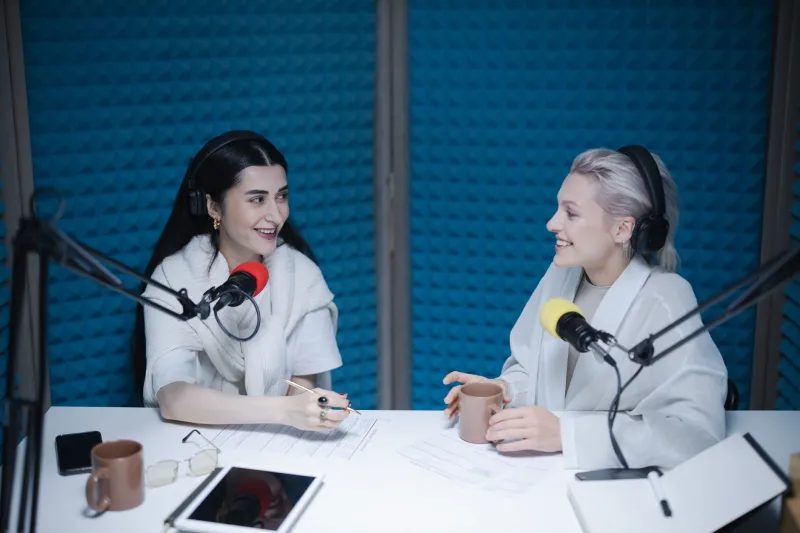
Photo: FortuneEmpireRecords, CC0, via Wikimedia Commons
There is a very specific silence that fills a youth radio studio when a track you loved in the headphones suddenly reveals a word you cannot broadcast. It lasts about half a second. Then the presenter’s eyes go wide, the producer waves their arms like they’re landing a plane, and someone lunges for the fader. If you’ve ever done a live show at a community station above a chippy in Leeds, a school studio in Birmingham or a converted shipping container in Cardiff, you know the feeling.
In 2026, the clean version is no longer just a box to tick. For UK youth radio, it’s a creative problem, a compliance question and a cultural minefield all at once. The good stations aren’t pretending swear words don’t exist. They’re building systems, jokes and honest on-air moments around them.
The split-second before the swear
Most young presenters learn the hard way that the “clean” version on a streaming platform isn’t always clean enough. Sometimes the bleep is placed over a different syllable. Sometimes the word is reversed. Sometimes there’s no edit at all because the track is a leak, a white-label or a mate’s SoundCloud upload. And sometimes the song is fine until the guest vocalist turns up.
“We had a rule: if you haven’t listened to the whole track on the studio speakers before you play it, you don’t play it,” says a volunteer producer at a youth-led community station in Bristol. “That sounds obvious. It is obvious. But when you’re 16 and excited about a new drop, obvious goes out the window.”
The first line of defence is still the back-up track. A short list of songs you know inside out, with edits you’ve checked yourself. But the back-up track is a safety net, not a strategy. The interesting work is happening in how stations prepare young presenters to handle the moment when the net fails.
The bleep is a badge of honour
At several UK youth stations, making your own bleep edit has become a point of pride. Teams use free audio software to drop a tone, a cowbell, a vocal chop or even the station’s own jingle over the offending word. The result is sometimes messy. That’s part of the charm. A homemade bleep says: we’re live, we’re local and we’re paying attention.
One station in Manchester runs “edit nights” where young presenters bring tracks they want to play and work together on clean versions. It’s part music journalism, part audio engineering and part group chat. The rules are simple: the edit has to keep the rhythm, the meaning has to survive and nobody is allowed to accidentally leave the original word underneath at low volume. That last one has caught out more people than you’d think.
The best edits don’t pretend the song is something it isn’t. They lean into the interruption. A well-placed bleep can be funny. A lyrical rewrite can be clever. A sudden drop to silence followed by a presenter laughing and saying “we’ll come back to that one” can be more authentic than a perfectly scrubbed radio edit.
Content flags: the spreadsheet that saves the show
Ask a youth radio producer about their music log and you’ll often get a sigh. Then they’ll show you a spreadsheet. In 2026, the smarter stations are using simple content flag systems: every track is marked green, amber or red depending on language, themes and context. Green means safe for daytime. Amber means play with caution, maybe after a spoken introduction. Red means not without a producer and a very good reason.
This isn’t about banning drill, grime, rap or any other genre that gets unfairly blamed for language. It’s about knowing your audience and your licence. A Saturday morning show aimed at 13-year-olds is a different beast from a Friday night show aimed at 19-year-olds. The flag system gives young presenters a shared language to talk about risk without feeling like they’re being told off.
One station in London uses sticky notes on the studio wall. Another uses a shared online doc that updates in real time. The method matters less than the conversation. When a presenter has to decide whether a track is amber or red, they’re already thinking about who’s listening and why the language matters.
Rewrite, don’t retreat
There’s a temptation, when a song causes trouble, to quietly drop it from the playlist. That can be the right call. But it can also be a missed opportunity. Some youth presenters are experimenting with lyrical rewrites — not official edits, but live versions where they rap or sing over the offending line with a cleaner alternative. It’s risky. It can sound brilliant. It can also sound like a school assembly.
The key is consent and context. If the artist is in the room, ask. If the song is about a specific experience, don’t sand it down until it means nothing. And if you’re going to rewrite, tell the audience what you’re doing. A quick “here’s our radio-friendly version, don’t come for me” can turn a potential complaint into a moment of connection.
The Ofcom conversation nobody wants to have alone
Let’s talk about the rules. Ofcom’s Broadcasting Code expects broadcasters to protect audiences from offensive language, especially before the 9pm watershed, and to justify any offensive content by its context. Community radio and online stations have different licensing arrangements, but the principle is the same: you need to know what you’re playing and why. School radio adds another layer, because the audience includes pupils, parents and staff who didn’t choose to opt in.
This is where youth stations can fall down. Not because young presenters don’t care, but because nobody has explained the rules in plain English. A 15-minute training session on “what to do if a swear word slips through” is worth more than a 40-page handbook nobody reads.
The stations doing it well make compliance a group activity. They nominate a music editor. They keep a log of edits. They rehearse the apology. They remind presenters that saying “sorry, that was the wrong version, here’s the clean one” is not a failure. It’s live radio.
Authenticity is not the same as carelessness
There’s a myth that clean edits kill the vibe. Sometimes they do. A badly bleeped track can sound like a fax machine falling down stairs. But the bigger myth is that authenticity means playing whatever you want, whenever you want. For youth radio, authenticity means sounding like the people in the room. That includes the 14-year-old listening on the bus, the parent in the car and the presenter trying not to get the station fined.
In 2026, the best UK youth stations are treating the clean version crisis as a chance to be more creative, not less. They’re making edits, writing flags, having awkward conversations and occasionally laughing at themselves. The vibe survives. The song survives. And the presenter learns that the mute button is not the only tool in the box.