Bedside Manner, Broadcast Skills: The Hospital Station Training UK Youth Radio's Next Wave
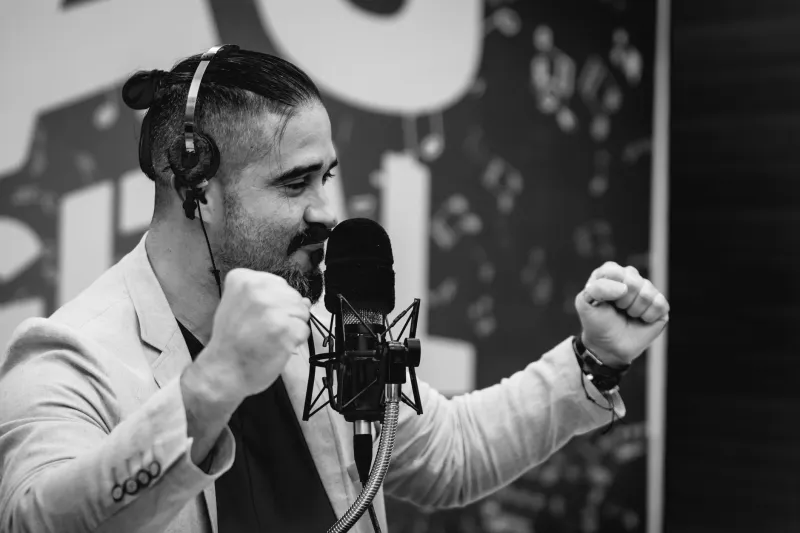
Hospital radio rarely turns up in the same conversation as youth-led community stations. It does not have the buzz of a festival outside broadcast or the cool of a new music showcase. But walk into a hospital radio studio on a weekday evening and you will often find a teenager learning the most useful lesson in broadcasting: how to talk to one person who really needs to hear you.
That is the argument worth taking seriously in 2026. While UK youth stations compete for attention, hospital radio has been quietly running its own academy — one built on requests, long-stay residents, careful conversations and the simple discipline of not being the most important person in the room.
The ward as a classroom
Most youth radio training starts with the technical stuff: how to open a mic, how to hit a link, how to keep the energy up. Hospital radio flips that. The first skill is listening. A request comes in for a patient on a long-stay ward, maybe from a relative, maybe from a staff nurse on behalf of someone who has been in for weeks. The young presenter has to find the right tone, read the name correctly, and remember that the person listening is not a demographic.
That is a very different muscle from the usual youth radio diet of punchy links and playlist momentum. It teaches restraint. It teaches you that dead air is sometimes better than filling a gap with noise. And it teaches you that a dedication does not need a dramatic story to matter.
For youth stations, this is a recruitment opportunity hiding in plain sight. Young people who are thoughtful, curious and good with people often do not see themselves in the shouty, high-energy version of radio. Hospital radio gives them a door in.
Requests are the original social media
A hospital request show is a community noticeboard with a soundtrack. Someone wants a song for a parent. Someone else wants a mention for a ward team. A long-stay patient wants the presenter to read out a message that has been sitting in a drawer for a week.
Young presenters who learn to handle that inbox learn a lot fast. They learn to verify details without making it feel like an interrogation. They learn to handle sensitive information without turning it into content. They learn that a name, a ward and a song can carry more weight than a whole programme of banter.
Youth radio often talks about audience engagement as if it begins with a phone-in or a comment section. Hospital radio suggests something simpler: engagement begins with a specific person asking for a specific thing, and a presenter who takes that seriously.
Care is a safeguarding skill
Hospital radio is not a safeguarding-free zone. If anything, it asks sharper questions than many youth stations are used to. Who can volunteer? What contact is allowed with patients? How do you handle a request that hints at something more serious? What do you do when a long-stay resident wants to talk on air about their treatment?
The good stations do not wing it. They have clear boundaries, supervision and a culture of checking in. Younger volunteers are often paired with experienced hands. Patient confidentiality is not a vague idea; it is a practical rule that shapes every link.
That is exactly the kind of training youth stations need more of. Community radio is full of well-meaning teams who want to platform young voices but have not thought through how to handle vulnerable contributors, sensitive stories or the emotional load that comes with real-life broadcasting. Hospital radio has been doing that work for decades, often without much recognition.
What youth stations should borrow
There are practical lessons here. First, recruit for temperament as well as talent. A young person who is calm, reliable and genuinely interested in other people can be taught to present. A young person who only wants to be loud is harder to teach empathy.
Second, build smaller shows. A 30-minute request programme with five carefully prepared links is better training than a three-hour sprawl with no focus. Hospital radio understands that the audience is not a mass market. Youth stations could learn from that and stop treating every output as a launch campaign.
Third, make the handover visible. Hospital radio volunteers often move on to community stations, university radio or paid production work, but the route is rarely celebrated. Youth radio could build proper bridges — sharing training, inviting hospital presenters onto youth stations, and treating ward experience as a real credit rather than a quirky footnote.
The quiet pipeline
None of this is about making youth radio earnest. It is about widening the door. Hospital radio offers a low-pressure, high-empathy environment where young presenters can make mistakes without an algorithm judging them. They can learn to read a room they cannot see. They can learn that a good broadcast is not always the one with the biggest reaction.
For All Star Youth Radio readers thinking about their first show, it is worth asking whether the nearest hospital station has a training night. For youth station managers, it is worth asking why not. The next great UK presenter might not come from a TikTok feed or a school workshop. They might come from a Tuesday evening request show, reading out a dedication for someone who has not left the ward in months.
That is not a glamorous pipeline. But it is a real one — and it is already on air.