Quiet on Air: How Young UK Broadcasters Are Rethinking the Poppy Season
Photo: Post of the Soviet Union (Lesegri)., Public domain, via Wikimedia Commons
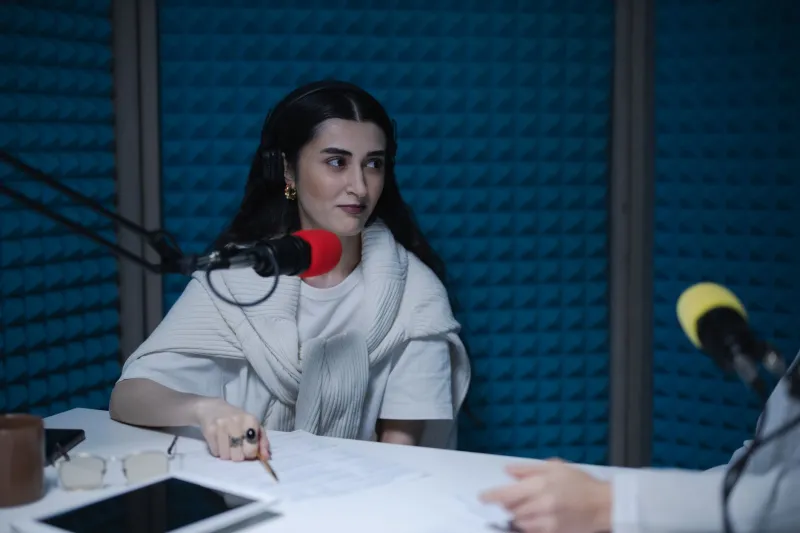
At 10.59am on 11 November, a youth radio studio can feel like the quietest place in the country. The chat stops. The beds fade. Someone in the corner stops scrolling. For two minutes, a station built on noise and energy has to trust the hush.
That silence is easy to play out. It is much harder to earn. Across the UK this week, youth-led stations are working through the same question: how do you mark Remembrance in a way that feels honest to a teenage audience, without reaching for the same clip-art poppy and the same borrowed script?
The poppy graphic is not a programme
The default move is familiar: a red poppy on the socials, a sombre voiceover, a playlist of slow songs. It is respectful, but it is not necessarily radio. Teenagers can spot a template from a mile off, and youth programmers know it.
Instead, several grassroots teams have spent the past fortnight building something more local. That might mean a five-minute pre-record with a British Legion branch in the next town, or a poem written by a Year 10 pupil about a great-grandfather they never met. It might mean a listener phone-in recorded the week before, so nobody is put on the spot live at 11am.
The best of these pieces do not try to explain war in a single link. They do something smaller and more useful: they hand the microphone to people who live nearby, and they let the audience hear the ordinary textures of memory — a medal in a drawer, a name on a village memorial, a family story that has been passed down with more gaps than details.
The interview that is not a history lesson
One of the strongest production choices is also the least flashy: keeping veteran interviews short, specific and local. A 20-minute sit-down can collapse under the weight of expectation. A seven-minute conversation about a single object, a single journey or a single name on a plaque often does more.
There is editorial care in that choice, too. Youth radio teams are not newsrooms with a defence desk. They are often volunteers, students and first-time producers, working with people who may be revisiting difficult memories. The safeguarding is not just about the young people in the studio — it is about the interviewee who has agreed to talk to a teenager with a microphone and a deadline.
That means pre-recording where possible, agreeing the ground rules beforehand, and having an adult producer on hand who can stop the tape if the conversation drifts somewhere it should not. It means not ambushing anyone with a question about loss live on air. It means checking whether a veteran wants their full name used, or whether a local cadet wants to be identified at all.
Poetry, phone-ins and the art of the hold
Teen poetry has become one of the quiet workhorses of remembrance programming. Not because every 15-year-old is a poet, but because a poem can hold a complicated feeling without needing to resolve it. A three-line piece about a school corridor falling silent can do more than a paragraph of narration.
The phone-in is trickier. Live calls are unpredictable, and Remembrance is not the moment for an unmoderated free-for-all. The stations getting it right tend to pre-record contributions, or run a text and voice-note line with a producer filtering before anything hits the desk. They also make space for the caller who does not want to say much. A single sentence — “my nan always stops what she’s doing” — can be enough.
Then there is the aftercare. A young presenter who has spent a week listening to stories about conflict may not be ready to jump straight into a chart rundown. Some teams are now building in a debrief, a cup of tea and a check-in after the programme. It is not glamorous, but it is the difference between a station that uses its community and one that looks after it.
Does the hush bring new ears?
There is a practical question underneath all this: can remembrance programming actually bring new listeners into grassroots radio? The early signs are mixed but interesting. The two-minute silence itself is not a ratings winner. But the surrounding content — the local interviews, the school poems, the short documentaries — travels well on social clips and word of mouth. A teenager who would not tune in for a chart show might share a clip of their classmate reading a poem.
That is the opportunity. Remembrance gives youth radio a reason to be serious without being stiff, local without being parochial, and quiet without being empty. It is a ritual that already belongs to the audience’s families and streets. The job of the station is not to reinvent it, but to make room for it.
At 11.02am, the microphones come back on. The presenter exhales. The next track starts. If the two minutes were earned, the rest of the show sounds different — a little more grounded, a little more connected to the town outside the window. That is not a bad way to spend a Tuesday morning on air.